
4th in CQ WW DX SSB 2023

Over the weekend of 28th & 29th of October five members of FRARS formed a team to operate the CQ WW SSB contest from our HF shack at the club.

This was a Mutli Op All Band QRO effort and we used a beam antenna for the upper bands as well as a top band windom and a vertical for the lower bands.

The callsign used was G4R, this is a short contest call issued to us by the RSGB which allows for shorter exchanges and less chance of mistakes.
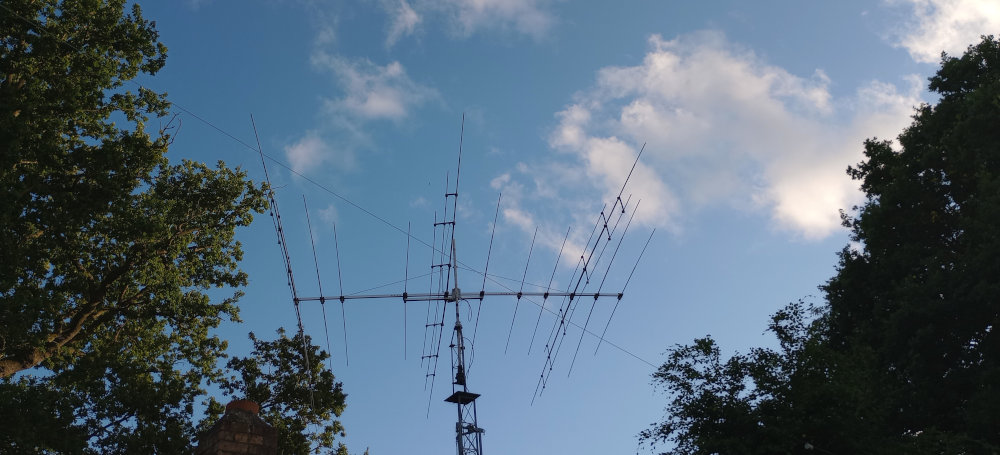
Quite a bit of preparation went into the event with team members wiring up footswitches, checking headsets, checking over our computer rig control & logging and generally checking out the rig, amp and antennas.

Several of us were new to SSB contesting but we soon got into it with good runs on all bands. Conditions on Saturday were particularly good and the bands were still open on Sunday with big US pile ups especially on 15 m.

We ended up with a raw score of over 850,000 which gave us 4th in our category in the UK which we were pleased with.

We’ll be back next year with lots of lessons learned and improved antennas.

Team members: 2E0NEP G0MFR G4CVX M0ODE M0RHS

The CQ DX WW web page can be found here.

Article by Gareth G0MFR, 6/11/2023.
The Joy of Homebrewing

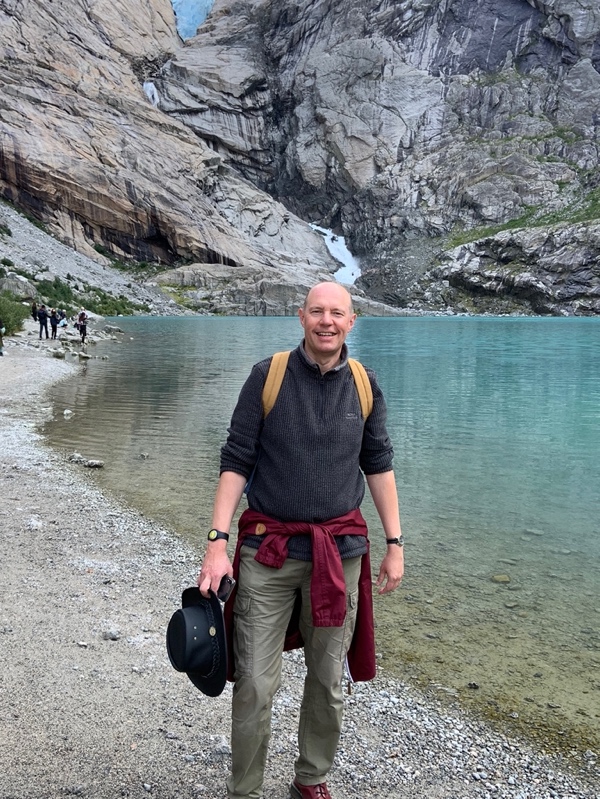
Hi, I’m Nick (‘The Vic’), an ordained minister in the Methodist Church, FRARS member and keen radio constructor and electronics tinkerer! I took all three of my licence exams at FRARS and it was them that encouraged me on this fascinating voyage of discovery.

I’m fascinated with how things work and it’s not enough for me to operate a radio. I want to know how it does what it does! So I build so that I can better understand.

My passion is for designing and building my own SSB transceivers from scratch. I’m currently working on No. 6.

I also enjoy sharing my enthusiasm by giving talks at other radio clubs and through my own dedicated YouTube channel:

Nick’s YouTube Channel

My personal favourite is transceiver No. 4: The Optimiser. It is a tri-band (80/40/20 m) QRP SSB transceiver built with a bi-directional design and enclosed in a stylish red metal bread bin … because I can!

Article by Nick M0NTV, 5/11/2023.

YO DX HF Contest Win for G4R

As usual YO DX HF is one of the favourite contests for club member Romeo YO4RDW! It was great to make some 67 QSOs on 10 m and get them in the log. A total of 1204 QSOs were achieved.

The graphs show the QSO rate and the distribution of activity across the bands.

Conditions were not great, with 80 m and 40 m very noisy. Also, the rate dropped during the night and Romeo had time for pork pies and coffee!

The goal was to win the contest and that goal was achieved!

It was a great time and a lot of fun.

Article by Romeo YO4RDW, 31/10/2023.

Last Contacts to HB9 on 3.4 GHz

On Friday 27/10/2023, FRARS G4RFR was put on 3.4 GHz EME with a view to working Dan HB9Q for a first and last time before the Swiss authority removes the band for them. The QSO was successful and now marks one of the last QSOs with the Swiss on 3.4 GHz.

We responded to Dan’s request for a last time opportunity by using the 3.65 m prime dish and fitting the refurbished 3.4 GHz system.

Julian G3YGF, John G0API and Tony G3PFM were present and made the contacts.

This consists of a purpose built feed box “sled” which contains a circular polarised waveguide feed designed to provide approx 25 dB of isolation between the TX and RX ports. On RX the first stage is a G4DDK 0.45 dB low noise pre-amp, followed by a waveguide based Evanescent band pass filter and then a GaAsFET second stage .

A commercial transverter (DownEast) forms the back end and down conversion to 144 MHz I.F.

On TX our usual 10 GHz IC-746 rig generates the WSJT Q65 or CW drive to the TVTR, which is mounted in a tote bin just under the dish rim. On the sled are a pair of 50 W Toshiba PA modules and matching SWPSU, supplied at 240 V input. The PAs are phased together and produce around 45 W currently (one module is running well under nominal power out) .

Control is provided by an onboard sequencer and backed up by our usual 10 GHz sequencer system .

The dish is controlled by our bespoke Medii software and at 3.4 GHz the -3 dB (half power) beamwidth is approximately 1.8 degrees, so a lot less critical than the 0.5 degree we usually see at 10 GHz .

The tracking worked without any error or need for input from us during the 3 Hr session, which is just as well as the Moon on the boresight camera kept being obscured by ominous rain clouds .

The entire log from the session is below.

27-10-2023 40W G4RFR 3.4GHz
HB9Q   19:03Hrs 3400.100  -5 sent/  -4 rcvd Q65C JN47 24dB S/N in 6Hz 10m/100W
HB9Q   19:12Hrs 3400.100 559 sent/ 559 rcvd CW
DL4DTU 19:30Hrs 3400.095 -12 sent/ -12 rcvd Q65C(JO60)15dB in 6Hz 4m6/75W
DL3WDG 19:35Hrs 3400.095 -16 sent/ -11 rcvd Q65C JN68 his best -13 2m4/65W
DL1SUZ 19:42Hrs 3400.095 -17 sent/ -16 rcvd Q65C JO53 10dB S/N in 6Hz 3m2/45W
DB6NT  19:58Hrs 3400.140 539 sent/ 559 rcvd CW        3m7 100W Circ
PE1LTR 20:20Hrs 3400.100   - sent/   - rcvd Q65C      Nil 1m5/45W

Article by John G0API, 28/10/2023.